

Emojis in Google Ads: From Novelty to Strategic Signal
Updated perspective on emoji use in paid search and social advertising
When Google quietly allowed emojis back into ad copy in 2017, it sparked immediate curiosity—and plenty of misuse. Nearly a decade later, emojis haven’t disappeared, but they’ve settled into a much more constrained, intentional role across Google Ads and social platforms. What was once a novelty tactic is now better understood as a contextual signal that must align with platform policy, user intent, and brand credibility.
This article revisits emoji usage in advertising through a modern lens, focusing on where emojis can add value, where they introduce risk, and how advertisers should think about them today.
How Google Currently Treats Emojis in Ads
Google Ads policies no longer explicitly encourage emojis, but they do allow them under strict conditions. Emojis are evaluated like any other ad element: relevance, clarity, and user experience matter more than visual flair.
Key policy realities today:
- Emojis must clearly relate to the product, service, or offer
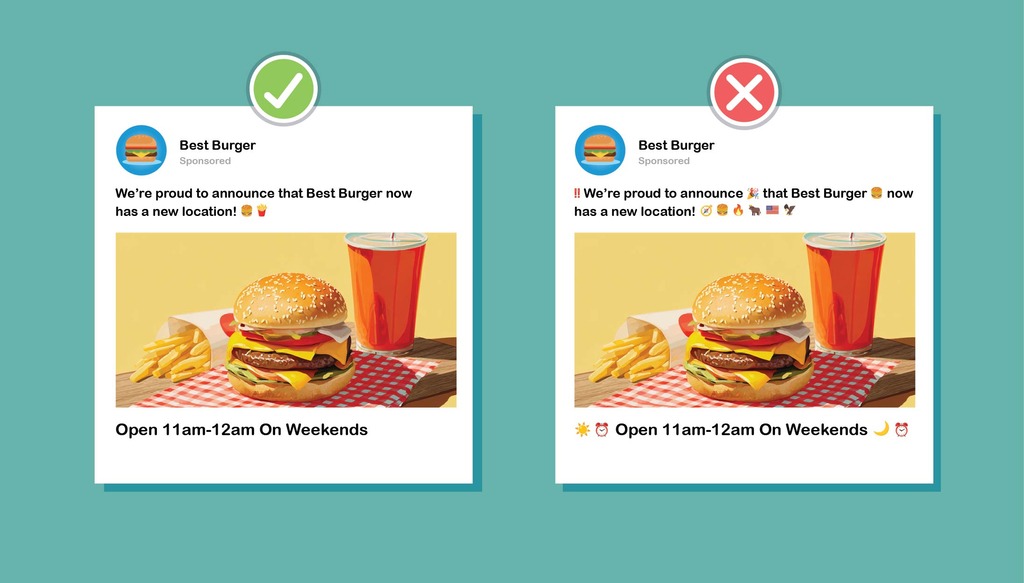
- Overuse, repetition, or decorative-only emojis increase rejection risk
- Emojis cannot be misleading, sensational, or disruptive
- Approval may vary by campaign type, device, and language
In practice, emojis are most likely to be approved in:
- Local service ads
- Retail or food-related promotions
- Seasonal or event-based campaigns
They are far less consistent in:
- B2B advertising
- Financial, legal, or medical industries
- Regulated or trust-sensitive verticals

The Cognitive Advantage (and Its Limits)
The original argument for emojis still holds: humans process visual symbols faster than text. A single, well-chosen emoji can:
- Create a visual pause in dense SERPs
- Reinforce meaning without adding characters
- Support emotional tone when appropriate
However, modern SERPs are more crowded than ever, and users are more skeptical. What once felt novel can now feel promotional or unprofessional if misapplied.
Important nuance:
- Emojis do not improve ad rank on their own
- They do not directly affect Quality Score
- Any CTR lift must outweigh potential trust erosion
In testing we’ve seen across platforms, emojis tend to help when:
- They clarify the offer (📍 local, 📅 appointment-based, 🎟️ events)
- They match user expectations for the category
- They are used sparingly—often one emoji, not multiple
Emojis, Search Intent, and Metadata Reality

Emojis are not:
- Reliably searchable in Google Ads
- Indexed in the same way as text keywords
- A substitute for structured intent signals
While emojis may appear in queries (especially on mobile), advertisers cannot meaningfully target them without traditional keyword and intent modeling behind the scenes. Emojis should be treated as presentation, not targeting.
This distinction matters because:
- Pasting emojis into headlines without intent alignment often lowers performance
- Emojis cannot compensate for weak copy or poor landing page relevance
- They should follow strategy—not lead it

Social Media: Where Emojis Carry More Semantic Weight
Unlike paid search, emojis play a much more established role in social media communication. On platforms like Instagram, LinkedIn, and X:
- Emojis often signal tone and pacing
- They function as visual separators in dense text
- Users expect a higher level of informality
However, even on social platforms, effectiveness depends heavily on audience and brand positioning. Emojis that perform well for consumer brands may actively harm credibility for professional services.
A practical rule:
- If your audience uses emojis naturally in conversation, selective use may feel aligned
- If not, emojis can signal a mismatch in voice and intent
Strategic Guidance: When Emojis Make Sense (and When They Don’t)

- The industry is visual, consumer-facing, or local
- The emoji reinforces meaning, not decoration
- Testing shows measurable CTR or engagement lift
- Brand voice already allows for informality
Avoid emojis when:
- Trust, authority, or compliance are core concerns
- The emoji does not add clarity
- Ads are being rejected inconsistently
- The campaign targets high-intent, professional decision-makers
The most important takeaway: emojis are not a tactic to “stand out.” They are a tool that only works when integrated into a broader messaging and intent strategy.
Ready to Refine Your Ad Strategy?
Emoji usage is just one small signal within a much larger paid media ecosystem. If you’re evaluating ad performance, policy compliance, or message alignment across Google Ads and social platforms, JTech can help you determine what’s adding value—and what’s introducing risk.
Schedule a consultation and get started today!

About Chris Pontin
Chris is JTech’s Production Project Coordinator with over 15 years of experience in web development and design. He holds a Bachelor’s degree in Computer Information Systems and is CompTIA A+ certified, blending technical expertise with creative problem-solving. An adept writer as well, Chris contributes to content creation alongside leading project coordination and overseeing platform maintenance—helping deliver thoughtful, user-focused digital solutions.